
Key Takeaways
- More and more people now ask AI tools like ChatGPT and Gemini for product suggestions before they buy, so if your brand isn’t mentioned there, you’re missing sales you never even see.
- The answers that need to be retrieved by an LLM are on very clear pages, with well-structured content, which is more important than the number of keywords.
- By using an AI visibility tool such as MentionPilot, you’re able to view what other prompts talk about you and what others talk about your competitor.
Introduction
Picture this. A customer asks ChatGPT which running shoes are great to purchase, and your competitor is on the list; not you. That one answer may be the determining factor in the loss of a sale you couldn’t even imagine. In this guide, you’ll learn practical ways to improve your visibility in AI-generated answers.
What Is LLM SEO?
LLM SEO encompasses strategies designed to make it easier for AI systems such as ChatGPT, Claude, Gemini, and Perplexity to understand and reference information about your brand. In traditional SEO, you’re searching for rankings on the results page. LLM SEO targets being included within the actual content of the user’s answer.
The two goals don’t necessarily have to be the same, but they can be the same goal. Traditional SEO factors such as site performance, crawlability, content quality, and backlinks can still matter. For AI search, clear and self-contained answers can also make information easier for AI systems to understand and use.
Why This Matters Right Now?
It’s not that people are avoiding Google search they’re just getting more used to AI. They pose a question, receive the answer, and go. When they’re ready to choose, if your brand is not being looked at, then you are invisible.
That’s why brands are now beginning to track AI brand mentions as they used to do with keywords. Only a good Google ranking can’t help you catch more buyers, because people are now more likely to use LLM models for direct answers.
It’s also becoming evident in numbers. Consumers can increasingly use AI modals to narrow down their options before visiting individual websites. For teams who still rely on search console clicks as their key marketing success metric, there is still one element of the marketing funnel that hasn’t been touched.
How LLMs Actually Decide What to Cite
LLMs are not like Google. They don’t crawl the internet live; the majority of AI models were trained on a snapshot of the web and do not incorporate the latest information when a query is posed. Most of the content that an AI gathers tends to share some of the same characteristics.
Solves the question of your problems and will do it in a short way with no long introduction. The same pertinent fact appears in various places across the Web, including those of your competitors. Then the page is adjacent, clear, and easy to read – and not required to be read into the jargon below the additional text here. If three AI tools are suggesting the same five sources for your topic, you can relax; it’s a map, not a problem. So, your challenge is to audition and become the next 6th (or even top 5) source!
The easiest starting point is to get some information and answers from ChatGPT, Claude, and Perplexity about your primary keyword prior to writing. Look at who is providing the frequent answers, and which part of the question is getting the mark. You are given this opportunity to make something that is more useful.
Ready to stop guessing and start tracking your AI mentions?
How to Actually Rank in AI Language Models
1. Write Answers, Not Introductions
Each section should begin with a paragraph of 1-2 sentences that answers the question of the section in the heading(s) of the section and then elaborates on that. A small habit that can make or break the success of an AI to understand your content.
Also, make the terms clearly understandable. Simple and complete sentences that AI models can quote word for word, like (AI visibility) = (brand visibility/number of occurrances / prominence).
2. Build Real Authority Signals
It’s not the amount of clever language; it’s the named authors, firsthand data, and specific numbers that make an impact with LLM SEO. If you see a line such as “in our testing across 40 client accounts,” it is considered to be a real experience. A line with filler content of “many businesses find” is not something that models like, and a line of “tends to” does not either.
Whether it’s original research, or its content is based on a case study with real numbers, or it’s just a screenshot from your own dashboard.
3. Get Mentioned Where Models Already Look
While many marketers might assume that social media would only be moderately influential, that’s not really the case. Many marketers would think that only social media would have a moderate impact on the development of AI training and retrieval; however, this is not the case. An LLM can’t stand alone when judging the claims you make about yourself; they have no reason to believe your claims unless others outside your own site say so.
4. Track It Instead of Guessing
The big part of the exercise most teams do too much but never actually try out is the optimization of the content, which they do for months without testing whether they are succeeding in ChatGPT or Gemini. An AI visibility tool puts an end to that. It will tell you where your brand is, where it isn’t, and where your competitors actually are showing up.
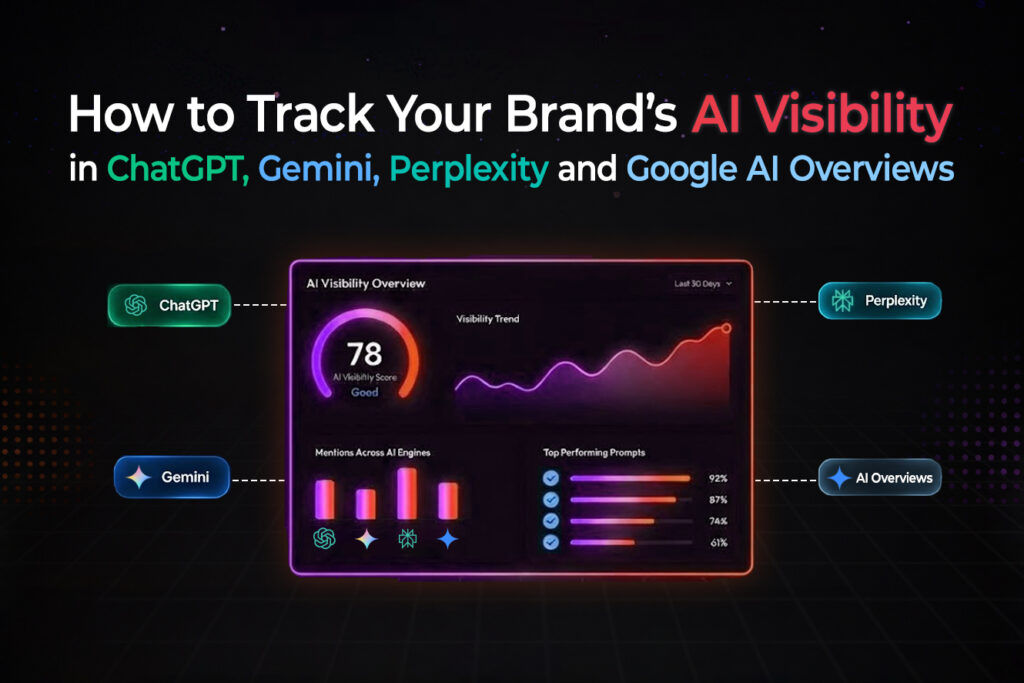
For instance, all Visibility metrics will be visible from MentionPilot across ChatGPT, Gemini, Perplexity, and Google’s AI Overviews from a single dashboard without needing to talk to a customer. With just a click, you can keep an eye on all the AI-powered mentions of your brand and spare a thought for churning out your next page, without needing a conversation between you and the research team.
Curious where your brand actually stands in ChatGPT right now?
Check Your AI Visibility Free →
The Bottom Line
You’ll notice online writing changes greatly in the near future as more and more buyers trust the answers given by AI before they ever reach your website. To be able to write online, you just need to follow a few simple habits: Clearly answer questions, back up claims with data, make sure AI can easily quote from content online, and instead of guessing, track results online.