
Key Takeaways
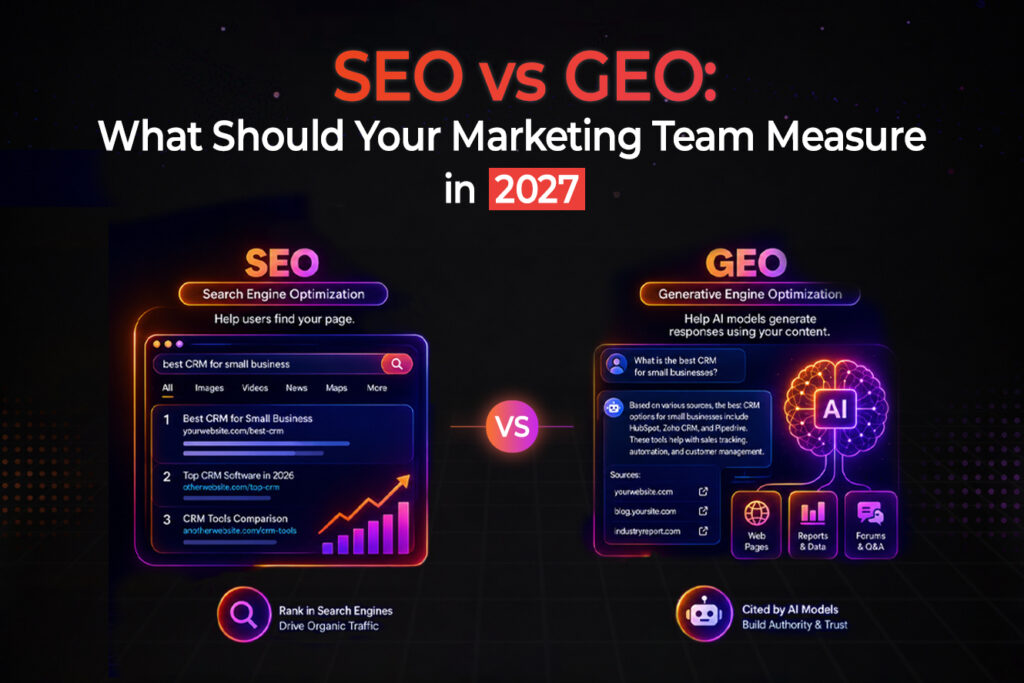
- SEO gets your pages ranked in search engine results while GEO gets your brand mentioned in AI-generated answers.
- While SEO is based on the same content as GEO, more weight is put on mentions, citations, context, and the reputation of a brand in GEO.
- Using the best search strategy for your company’s online presence: SEO for visible web presence and GEO for presence that AI can find, understand, and mention.
Introduction
As search evolves and AI answers become more prevalent, there is now another way for your brand to be found in search – on top of the regular search results. To better understand this new opportunity for your brand online, we discuss the difference between GEO and SEO in this blog. We also present you with a few tools, such as the ai mention tracker and the best ai visibility tools, which can help you with your online search strategy and compare you with your competitors on Google and other AI platforms.
What Is SEO?
Search engine optimization, or SEO, is short for search engine optimization. SEO is the optimization of a website in order to make search engines like Google able to better understand the website. As a result of this optimization, the website can be better ranked for relevant searches about products, services and themes of a website of a business.
SEO provides a solid basis for AI search. For AI search engines like Gemini or ChatGPT to use your website’s content, it needs to be easily crawlable, clear, and structured.
What Is GEO?
GEO stands for Generative Engine Optimization. GEO optimizes the Brand- and Content-Presence in answers from search engines generated by AI like ChatGPT, Gemini, Perplexity, or Google AI Overviews.
You also want your brand to be correctly mentioned and included in answers generated by the AI search engine.
An AI mention tracker helps you find out which of your brand mentions come from which prompts, how you’re being described, and where your competitors are instead. We’ve built MentionPilot around AI appearances, AI citations, AI sentiment, and AI competitor analysis. SEO is about earning a strong position in search engine results pages (SERPs). GEO is about earning visibility within AI-generated answers.
GEO does not replace SEO, and the two approaches work best together. As AI search results become more prevalent, it is now more important than ever to monitor the wider search picture and SEO. Your website’s strong pages do not automatically translate to positive AI mentions of you.
GEO vs SEO: The Main Difference
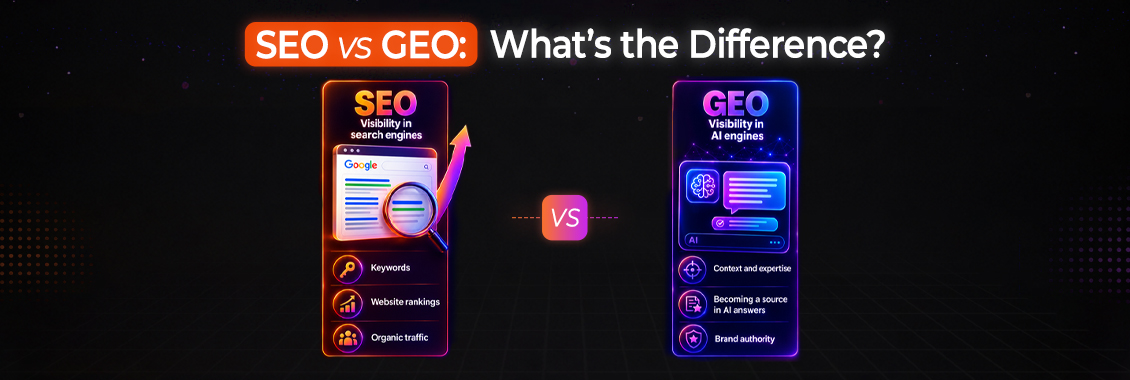
The difference is the search experience each one targets.
| SEO | GEO |
| Targets search results | Targets AI-generated answers |
| Focuses on page rankings | Focuses on mentions and citations |
| Drives users to web pages | Can influence users before a site visit |
| Uses search engine signals | Also considers context, sources, and reputation |
| Measures rankings, traffic, and clicks | Measures visibility, mentions, citations, sentiment, and position |
SEO means earning a good position in search engine results lists. GEO means earning a spot in the answer provided by a search engine.
GEO is not an alternative to SEO. While SEO helps AI systems to find your content, GEO describes what happens with your content within the search journey of the AI.
How SEO and GEO Work Together?
Think of SEO as building the foundation of your website and GEO as building on top of it to monitor the search results around your online presence.
Even when you have good pages on your website with useful information, SEO-favorable URLs, clear page structure, and good technical basics, a big part of the search process takes place outside of your website. This is what GEO is all about: where else does AI mention your brand, and does it get cited correctly from other sources than yourself?
Monitoring your whole search presence, not just your website pages, is important. A strong page does not necessarily mean a strong AI mention.
What Changes When You Optimize GEO?
The greatest change of focus for GEO optimization is from ranking single web pages to geospatial optimization of overall brand presence.
When you’re optimizing GEO, you are no longer just trying to get a strong ranking for a single page for a single query. You’re trying to create a stronger brand presence online, and to shape the way that your brand appears when it is mentioned in conversation online.
Clear language: Describe your products and services clearly. Write plain English copy and organize it in a straightforward and easy-to-follow manner. Answer the questions your customers want to ask about your business, and make sure customers can easily find the most important facts about you.
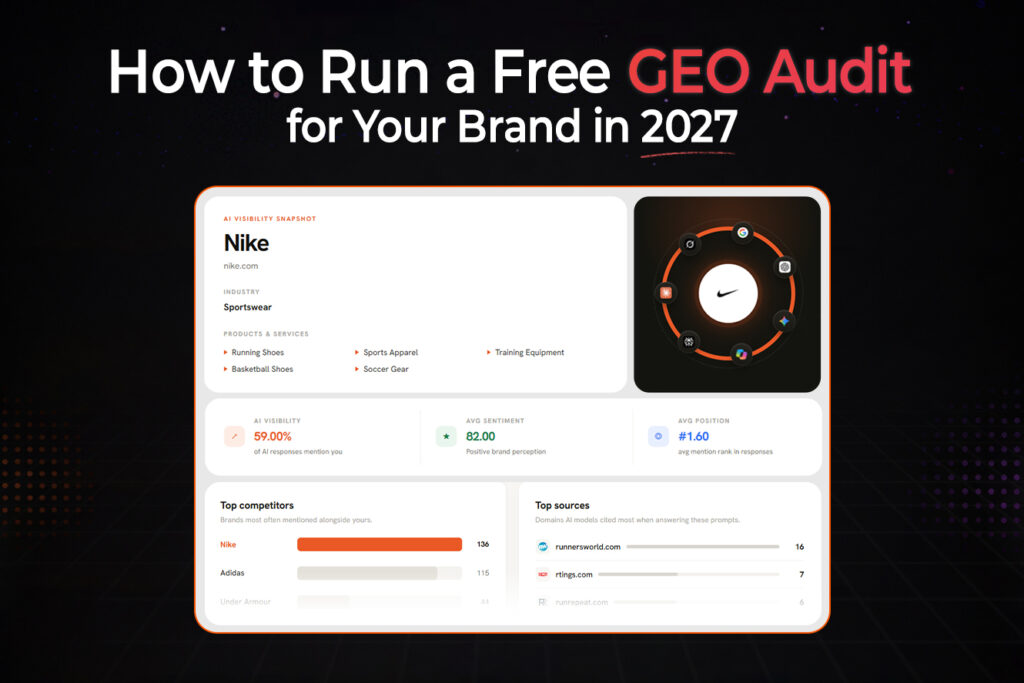
Instead of simply guessing, monitor what happens with an AI search for your business name and other relevant terms and topics, and see where your business is mentioned (a search for specific “prompts” can help here). Use an AI mention tracker to help.
What Should You Measure?
Since SEO work and GEO work are aimed at totally different goals, the way you measure results for the two is also quite different.
When measuring the success of SEO, you typically want to monitor rankings, search engine traffic, click-through rates, and conversion rates. However, to gauge the performance of GEO-integration of your brand online, you want to track brand mentions, positioning, cited sources, and sentiment around your brand online.
Additionally, tracking competitor visibility is key to identifying potential issues with content, reputation, or even brand-related statements that your competitors are better at providing proof for.
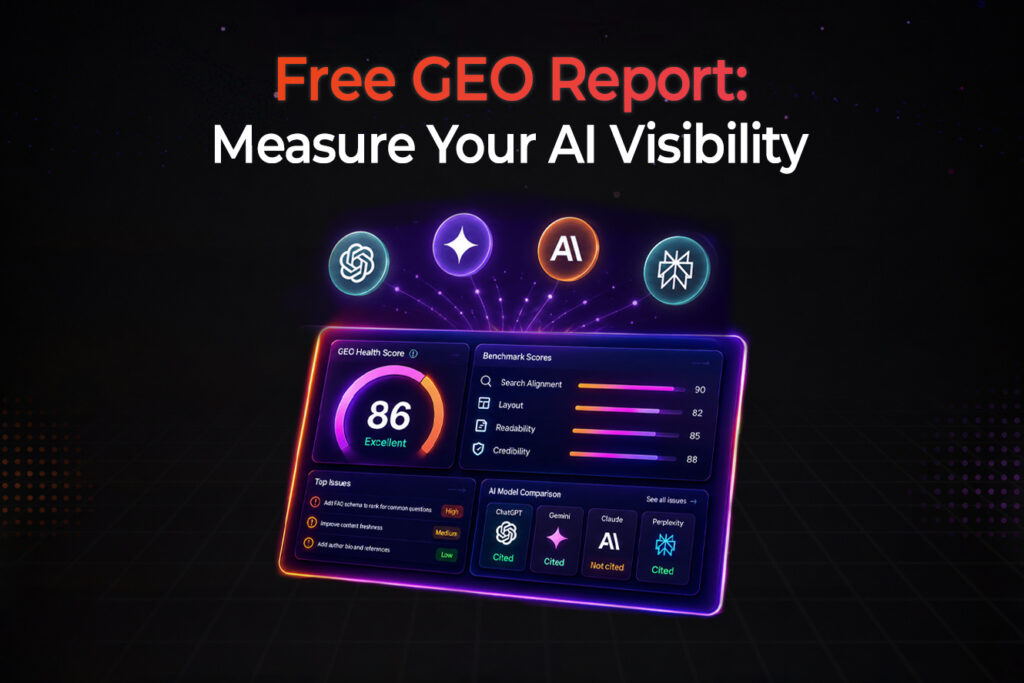
An AI visibility tracker will make your life easier and show you all the signals in one place.
How to Improve GEO Without Starting Over?
Remember, SEO is the starting point. You can build on your existing SEO work and make your content more useful for AI-generated answers. Start by making your most important pages clearly explain what you do, who you help, and why you are different from the competition.
Start to fill the holes in your content and write more relevant content by answering questions your customers have and creating short and to-the-point answers.
This external information is regularly created in the form of relevant reviews of a business, industry-oriented discussions, and directories. In addition to this, it is also typical for there to be expert commentary on the company and various other information that is trusted by users and seen as accurate by AI systems.
Lastly, track what you have found out with an AI mention tracker to see how visibility has changed over time and between different AI platforms. Identify which prompts are worth more attention than others.
Do You Need GEO or SEO?
For most businesses, the answer is both.
SEO helps to get people to go to your website by searching for something online, while GEO helps to get your brand mentioned when people ask for recommendations, to compare things, for explanations, or for products related to your business online via AI-powered tools and services.
First, make sure your basic SEO is in place. Create crawlable, useful pages on your website and organize your content so people can easily find what they need. Next, earn authority online for your brand.
Once you have established a solid SEO foundation, start to add GEO-related activities. Monitor important prompts, check for correct AI answers, check for correct citations, and, last but not least, find out if your brand is being mentioned at all and, if so, correctly.
The ultimate goal of these two search marketing channels is to help people find your brand online so that they can buy from you.
Common GEO Mistakes to Avoid
GEO is related to SEO, but it is not simply SEO for ChatGPT. AI-generated answers work differently from traditional search results and can draw information from sources beyond your website.
These can be positive or negative, correct, or even entirely inaccurate. Therefore, it is not sufficient to just chase mentions.
Write first the content that answers your customers’ questions. The content you create for your customers will also provide useful information for the search systems and people’s evaluations of your GEO information.
The Bottom Line
SEO and GEO are two search channels that belong in one search strategy: SEO gets your individual web pages ranked in search, while GEO gets your brand mentioned in AI answers.
While a solid website is still important today, it is also important to know how the AI systems describe a brand. This is where the best AI visibility tools help monitor mentions and citations of a brand online, check out the competition, and track any changes in the AI visibility of a brand online.
Want to see how your brand is featured in AI-generated search results? Start to track the relevant prompts and mentions for your business.