

Key Takeaways
- A free GEO audit checks if AI tools mention, describe, and link to your brand in their answers to questions.
- Start with the real buyer questions and test them in all major AI tools rather than solely with related keywords.
- The value of citations (as found in the content published by the AI) should be equal to that of mentions; therefore, include AI citation tracking in your audit from the outset.
Introduction
When someone asks ChatGPT for the best tool in a certain category, your brand should ideally be one of them that gets a mention. Sadly, you won’t even see those lost leads in your reports. A free GEO audit can quickly tell you where you stand. You can even get one done this week, all for free. Here’s how to get one done step by step.
What Is a GEO Audit?
A GEO audit looks at how mentions of your brand are handled by the AI in your Generative Engine, i.e., how you and your web pages have been optimized for the AI to understand them. The number of citations in AI-generated content is also important for a GEO audit, and therefore should be tracked from the very beginning.
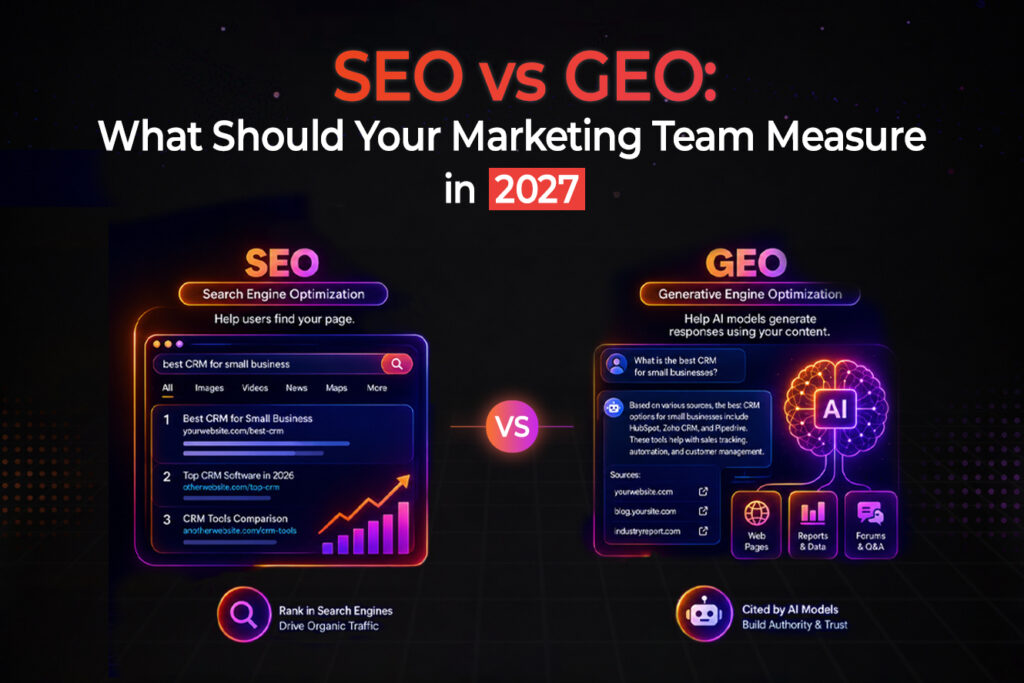
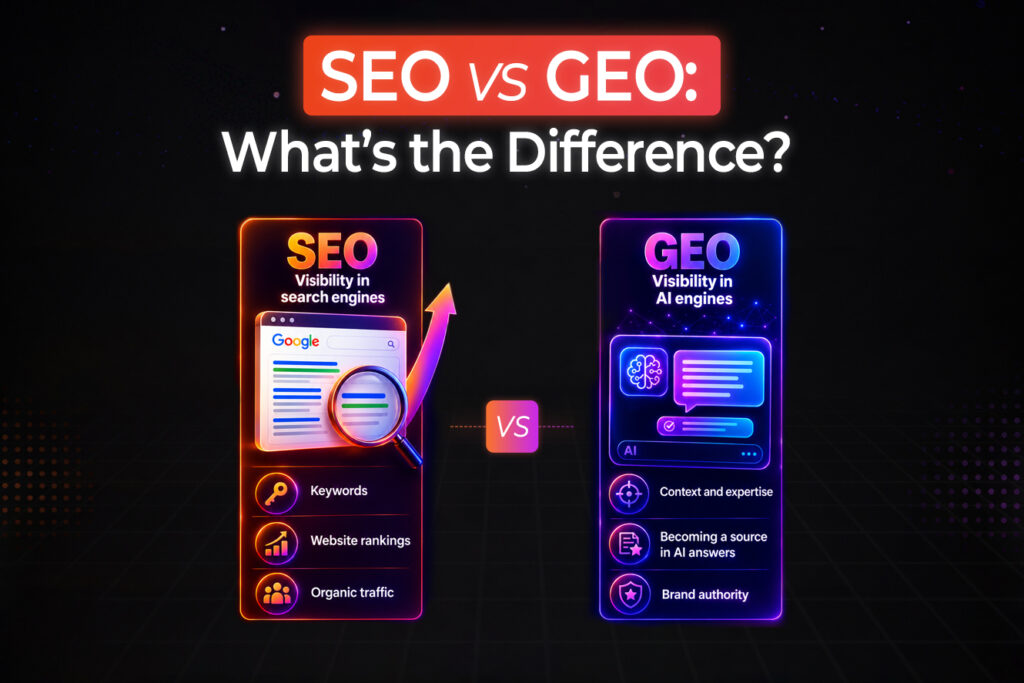
For a long time, SEO optimization has been measured by asking the question that SEO tries to answer for a website: “Do I rank?” A GEO audit for the optimization of a Generative Engine looks at a completely different question: “Does AI talk about us? And is it correct?”
Why a Free GEO Audit Matters in 2027?
If you send someone to your website for demos and that leads to no close for you, you will never even see that loss in your reports. In most cases today, the buyer will first ask AI for advice about his purchase and will read the three brands mentioned in that answer before opening up a search page.
It can also form the basis for a future review of AI brand mentions over time.
Step 1: Write Your Prompt List
Start by listing the real buyer questions that might be asked in natural language, such as you would write in a search bar. This would include a list of category-based questions, comparison-based questions, and even problem statements that may result in the loss of potential leads after giving a great demo.
Cover three types:
- Category questions: “best project tool for small agencies”
- Comparison questions: “your brand vs. a rival”
- Problem questions: “how do I stop losing leads after demos”
Add your brand name to a few of these prompts as well. Keep the list small enough to finish it.
Step 2: Run Every Prompt in Every AI Tool
Create a new chat for each of the AI tools (ChatGPT, Gemini, Perplexity, and Google AI Overviews) and send the same prompt to each of them. The answers will differ from tool to tool, and thus none of the tools will give you the complete answer. Start fresh with each new chat.
Then note 3 points about the answer:
1) Does your brand name occur?
2) Where does it occur in the list?
3) What does the AI say about your brand? This is the ‘manual’ way of analyzing AI brand mentions for your first ‘audit’.
Just read them yourself once by hand. There is far more insight in reading them yourself once by hand than there will ever be in any dashboard!
Manual analysis should be followed by scoring. To that end, Mentioned, Described, Linked is a simple three-question scoring method to apply to each Answer.
Step 3: Score Your Results With the Mentioned, Described, Linked Method
Raw notes are hard to act on. A simple way to sort them is to ask three questions about every answer.
| Question | What to Look For | If the Answer Is No |
| Mentioned? | Does your brand name show up at all? | Build pages and outside mentions around that topic. |
| Described? | Does the AI explain what you do correctly? | Fix your About page, product pages, and profiles. |
| Linked? | Does the AI point to your site as a source? | Make your key pages easier to quote. |
Make a column of Yes/No for each of the three algorithms to mark how you are doing. The weakest column first.
Want a head start?
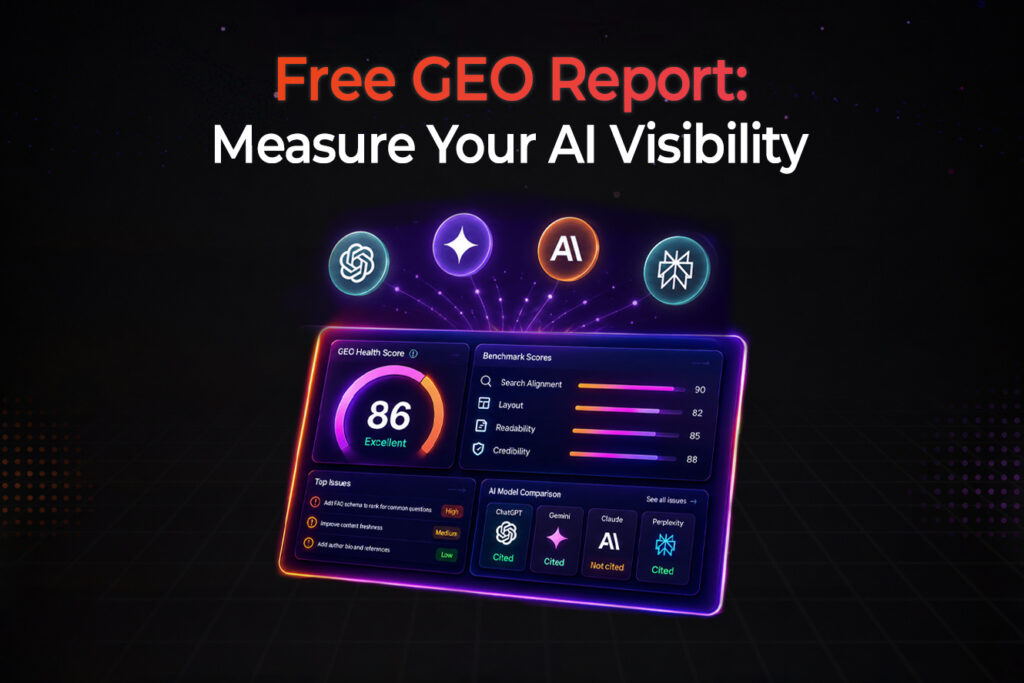
Get a free GEO report for your brand, instantly.
Get My Free GEO Report
Step 4: How Easy Is It to Quote From Your Pages?
Short, clear answers are often easily pulled by AI tools from pages that clearly state the main point of the page.
Check the following for each prompt:
- Does the page answer the main question of the prompt within the first two sentences of the page?
- Do the headings on the page read like questions that real people would ask?
- Are tables and lists (e.g., comparison tables, scorecards) used to present information to compare?
- Does your schema markup match what a visitor can actually see?
This is one of the errors most frequently found by SEO engineers. Schema for a FAQ without a visible FAQ causes trust problems, so the markup must be identical to the text on the page.
Step 5: Check Your Trust Signals
Finally, online presence information for your brand (your “GEO”) is extracted from many places online and reconciled by the tools.
Brand Name / Tagline / Contact Information must match across the website, social media, directories, and any additional places where you have an online presence. Articles must have real author names and bios. Test for reviews, awards, and customer proof at the top of the pages listed in Step 4.
This simple habit will help a lot: Use one exact spelling of your brand name on all occasions.
Step 6: See Who AI Cites Instead of You
For each of the answers to your query, see what sources it references. If the answers from the Perplexity and AI Overviews tools provide hyperlinks (as the ChatGPT tool has done whilst ‘researching’), list out the sources that keep appearing (review sites, news outlets, forums, competing blogs, etc.).
This is basic AI citation tracking. You can easily lose a comparison to a competitor who has more outside proof for his content (reviews, listings in web directories, etc., as well as media coverage).
List all the sites that frequently appeared in your searches (review sites, news sites, forums, and competitors’ sites). Look to get listed, get a review, or even supply original data for them to use in their research.
Note that manually re-running these four queries in a spreadsheet on an ongoing basis is time-consuming and, for most teams, will not be sustained over time. Use a tool to run these same queries on an ongoing basis.
Step 7: Turn Findings Into a Fix List and Test Again
Prioritize the simple fixes first (e.g., reword the top of a page, update a profile that was incorrectly listed, etc.). More involved items (e.g., creating a comparison page, obtaining a mention) will be prioritized on a longer-term basis.
Allow a few weeks to elapse and reissue the same queries to confirm whether all of the previously-identified fixes have held up. Subsequent regular audits could then be conducted on a monthly basis in rapidly-changing markets, and on a less frequent basis in more static marketplaces.
Conclusion
Get a Free GEO Audit Report first to get a thorough, up-to-date analysis of how your brand is being described and cited today by free AI tools. Run through the GEO Audit’s steps once manually and then let MentionPilot do the monitoring for you on top of the main four AI tools (ChatGPT, Gemini, Perplexity, Google AI Overviews). You can track AI brand mentions and citations, and compare your competitors’ descriptions and citations in one dashboard – sign up for the free trial of MentionPilot to start monitoring on autopilot.