
Key Takeaways
- AI visibility monitoring reveals where your SaaS brand features in answers generated by AI and which prompts evoke their presence.
- Good platforms relate mentions to prompts, citations, competitors, sentiment, and more than just an all-inclusive visibility score.
- Promptly track competitor visibility, citations, sentiment, and reporting all in one dashboard with MentionPilot.
Introduction
AI search has solved a very simple problem for any B2B SaaS: discoverability. If buyers ask ChatGPT, Gemini, Perplexity, or Google AI search what software they should buy, your brand may or may not show up in the answer.
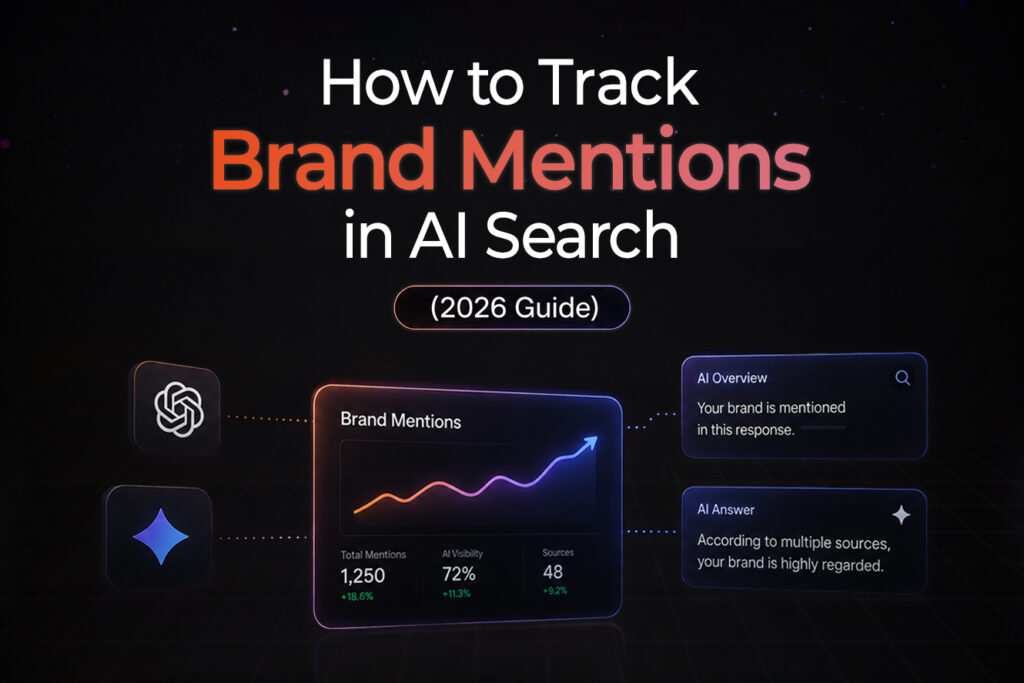
The simple, better question for 2027 planning is: can you see how AI systems discuss your product, competitors and the sources of those responses? Track AI brand mentions to understand where your brand appears, what prompts trigger those mentions, and which sources influence the answer. And that’s where AI visibility monitoring platforms come in.
What Is AI Visibility Monitoring?
AI visibility monitoring counts how many times a brand appears in AI-generated answers for relevant prompts, and when. It can even reveal competitors, the sources cited, and the tone in which these are quoted.
This is important for B2B SaaS teams because buyers actually ask questions, not just the names of companies. For example, they might simply search for the phrase “What are the best CRM tools for a startup?” or “What analytics platform works for remote sales teams?
A platform that is valuable should answer five things:
- Which prompts mention us?
- Which competitors appear instead?
- Which websites are being cited?
- What should we improve next?
- What Should B2B SaaS Teams Actively Search For?
What Should B2B SaaS Teams Look For?
- Prompt Tracking: Through Prompt Tracking, you can see the exact queries in which your brand gets mentioned.
- AI citation tracking: AI citation tracking tracks pages or sources that are cited in AI answers. This can expose content gaps and even third-party sources that are shaping visibility.
- Competitor monitoring: It indicates where some other SaaS company still shows up, but your brand does not.
- Sentiment tracking: It shows if AI describes your product as positive, neutral, or negative; this is sentiment tracking.
- Reporting: It is a reporting process where the information is structured in a way that removes guesswork for marketing leaders who need to consume it without sifting through ad hoc search results.
Best AI Visibility Monitoring Platforms for B2B SaaS
The right choice depends on your workflow. These platforms take different approaches to AI search visibility.
| Platform | Best Fit | Main Focus |
| MentionPilot | B2B SaaS teams | Prompts, citations, competitors, sentiment |
| Peec AI | AI visibility analysis | Visibility, position, sentiment, sources |
| OtterlyAI | AI search monitoring | Prompts, mentions, citations |
| Profound | Larger marketing teams | AI search visibility |
| Scrunch AI | AI search optimization | Brand visibility and AI readiness |
1. MentionPilot
MentionPilot is made for teams that need visibility into what their brand looks like across AI search. Connects ChatGPT, Perplexity, Gemini & Google AI Overviews to monitor brand mentions, citations, sentiment & competitor visibility in one place.
Specifically for B2B SaaS teams, its prompt-based approach is particularly helpful because it enables you to view the questions tied to your visibility versus just one universal number. You can compare your brand to competitors and see which websites are referenced in AI answers. It simplifies the process of sharing findings with clients or internal teams through its reporting feature. If you need a simple workflow to track ai brand mentions and link those mentions back to citations and competitors as well, MentionPilot is your tool.
2. Peec AI
Peec AI measures how a brand is seen by an AI system. The platform tracks visibility, average position, sentiment, and share of voice while enabling teams to compare their performance against competitors.
The Prompt Library is one of the most helpful pieces for B2B SaaS marketers, where teams can create monitoring around questions relevant to their category. It also reveals the sources from which found prompts have been cited most frequently, helping marketers understand which websites may be influencing responses with its AI-determined answerability score. Competitor comparison can indicate which other SaaS brands appear more frequently or rank more prominently in AI-generated responses.
3. OtterlyAI
AI search monitoring platform with research and optimization tools. It monitors brand mentions, citations, sentiment, competitors, and visibility across AI-powered search experiences. Teams can additionally research conversational triggers and update their monitoring of questions as needed.
However, for B2B SaaS, it can be helpful when your marketing team wants to upgrade from just observing AI visibility to enhancing it. The response from OtterlyAI contains content audit, crawlability checks, citation gap analysis, and recommendations. The prompt-level reporting can indicate brand mentions, brand coverage, citations, competitors, and sentiment for specific questions as well. That gives content teams additional context around why a brand might be appearing, missing, or mentioned. This is a method for teams that are bringing together AI search tracking with continuous content efforts.
4. Profound
Profound focuses on how brands appear in AI search and how their visibility changes across prompts and platforms. With prompt monitoring, visibility and sentiment tracking, citation tracking, and competitor benchmarking all on its platform.
This is good for the competitive side for B2B SaaS companies. Profound can compare brands across AI platforms and see which competitors are showing up for a specific topic and prompt. It also examines citation share, allowing teams to see how often they are being referenced by AI answers in their area as compared to competitors.
And this makes Profound applicable to larger marketing teams looking for AI search data that can be used in content planning and optimization. Instead of simply inquiring if your brand name was acknowledged, the platform continues to solve for which prompts, competitors, and sources were involved with that visibility.
5. Scrunch AI
We asked Scrunch AI, and they measure brand visibility, competitors, prompts, and citations in AI search. With its citation reporting, teams can view the exact URLs that are referenced in answers generated by an AI search and analyze those sources at both domain-level and page-level.
For instance, in B2B SaaS teams, competitive analysis can indicate when your company does not show up in AI answers as a competitor. Scrunch can also tell you what competitor or third-party pages are driving some of those responses and enable teams to see performance by prompt and platform.
This is of interest for content teams keen on associating AI with the pages and sources behind it. Scrunch does not frame AI visibility as simply a top-level metric and provides marketers with greater context about where mentions/citations are originating.
How to Choose the Right Platform
Start with real buyer questions. List the prompts someone would use to compare products, search for alternatives, check pricing, or search how to solve a specific problem.
After that, test each of the platforms against those prompts. Ask whether it can:
- Track your priority AI platforms.
- Reveal the prompts of your visibility.
- Monitor competitors using the same prompts.
- Check whether the platform provides historical data so you can measure changes in AI visibility over time.
- Filter out positive, neutral, and negative mentions.
- Turn findings into useful reports.
Especially for B2B SaaS teams, AI citation tracking becomes critical as it indicates which pages and sources play a part in AI responses. This information can be useful in optimizing the content strategy and determining what to update or reach out for.
Now, we are not going to do another dashboard. It is a reproducible method for viewing what AI says about you and how that might inform your next steps.